Electricity Basics
Hey Power Pals! It’s Ty the Beaver here. Do you know what makes electricity work? Let’s find out together!
To understand electricity, we need to talk about atoms. Atoms are the SUPER tiny building blocks that make up everything around us. Each atom has three main parts:
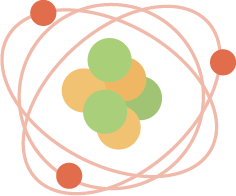
Protons: They’re positive and hang out in the middle.
Neutrons: They don’t have a charge, but they’re best buddies with protons.
Electrons: They’re negative and zoom around the outside of the atom.
When electrons start moving from one atom to another in the same direction, that movement creates electricity. Cool, right?
Electricity moves through something called a circuit. A circuit is a continuous path, such as a circle or a racetrack. If the circuit path remains solid (meaning no openings or breaks), electricity can easily flow through. Turning a light switch on completes a circuit, allowing electricity to reach your light. If an opening or break occurs in the circuit path, the flow of electricity stops. This is what happens when you turn off a light switch—you create a break in the circuit and disrupt the flow of electricity!
Some things let electricity flow easily, like metal. We call those conductors. Other things, like rubber or plastic, don’t let it flow well, and those are called insulators. Both are super important for keeping electricity safe and useful.
Wow! You just learned how electricity works. Way to go, Power Pals!

Fast Fact: First power plant
The first big U.S. power plant was called Pearl Street Station in Manhattan, built in 1882. It served just 85 customers!
Looking for more? The Cooperative Gang is here with powerful and fun resources just for you. You’ll find coloring sheets, puzzles, crossword games, exciting experiments, and more to make learning about electricity extra fun.